Buying a Sandbridge condo and wondering what that monthly HOA fee actually covers? You are not alone. On the oceanfront, the numbers can feel higher than expected, and the fine print matters. In this guide, you will learn what is typically included, the coastal factors that drive costs in Sandbridge, how to read an HOA budget, and what to ask before you buy. Let’s dive in.
What HOA fees usually cover
Most Sandbridge condo associations bundle essential building, amenity, and insurance costs into the monthly fee. Exact coverage depends on the condo declaration and current budget.
- Common area maintenance and repairs, including exterior siding, balconies, roofs, hallways, lighting, and elevator upkeep.
- Grounds care, such as landscaping, dune or pathway maintenance when the association is responsible, parking areas, and exterior pest control.
- Common utilities for shared spaces, covering electricity, water, and lighting in lobbies and corridors, plus trash collection for shared dumpsters.
- Building systems and safety, like HVAC for common areas, pool systems and pumps, fire alarm monitoring, and required inspections.
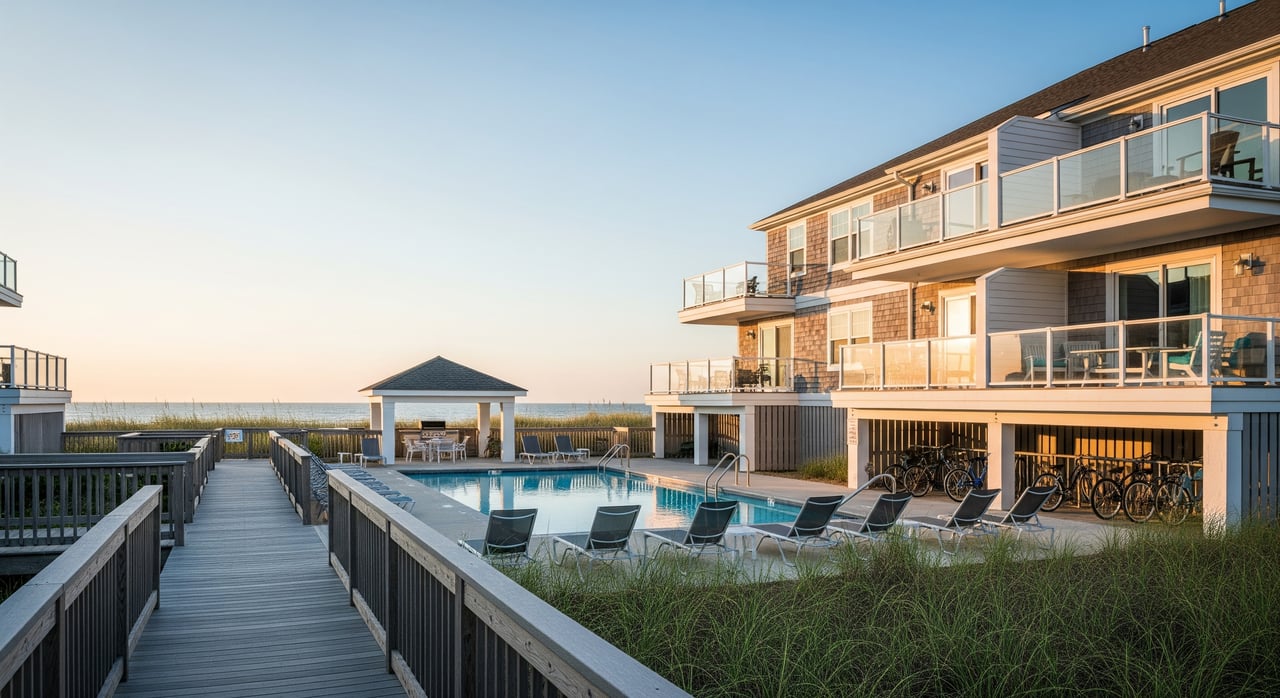
- Amenities operation and upkeep, including pools, hot tubs, clubhouse, fitness rooms, grills, gated parking, and beach access facilities.
- Management and professional services, such as management company fees, bookkeeping, payroll, accounting, and legal expenses.
- Insurance on the master policy for the building’s common elements and typically the building shell.
- Contributions to reserves for major replacements like roofs, siding, elevators, paving, and pool resurfacing.
What fees generally do not cover:
- Interior unit repairs, personal property, and owner improvements unless the declaration says otherwise.
- Utilities separately metered to the unit if not included by the association.
- Your HO-6 policy for the interior, personal property, and deductibles that may fall to owners.
Coastal factors that raise costs
Oceanfront living in Sandbridge is special, and it comes with unique cost drivers that often make HOA fees higher than inland condos.
- Elevated insurance costs. Wind and hurricane exposure increases premiums. Some buildings also carry separate flood insurance depending on the flood zone and the declaration.
- Storm repairs and debris removal. Nor’easters and hurricanes can require quick fixes to boardwalks, dune accessways, and exteriors, which may lead to emergency spending or special assessments.
- Salt, moisture, and wind wear. Railings, metalwork, coatings, and mechanical systems often need more frequent replacement due to corrosion.
- Dune and shoreline responsibilities. If the association maintains dunes, access structures, or seawalls, expect specialized engineering, permitting, and periodic repair costs.
- Resort-level amenities and staffing. Pools, security, onsite maintenance, and enhanced services add year-round operating expenses.
- Larger reserve needs. Coastal buildings benefit from robust reserves to handle big-ticket replacements and post-storm work without frequent assessments.
Insurance basics for Sandbridge condos
Insurance is one of the most important topics to clarify before you buy.
- Master policy scope varies. Some policies are “bare walls,” covering the building shell and common elements. Others are more inclusive and extend to unit finishes. Always confirm what the master policy covers.
- Your HO-6 policy. You typically need an HO-6 for personal property, interior finishes not covered by the master policy, liability, and loss of use. Lenders may require certain limits and deductible structures.
- Deductibles and assessments. Wind and named-storm deductibles can be high. Check how the association allocates deductibles and whether reserves or owner assessments are used.
- Flood insurance specifics. Flood coverage is often separate. Associations sometimes purchase master flood policies for the structure, while owners still carry contents and improvements coverage.
- Action steps. Obtain the master policy declaration pages, confirm covered perils and deductibles, and ask about recent hurricane or flood claims and how they were funded.
How to review HOA finances
A focused review of the association’s documents will help you see beyond the monthly fee and gauge long-term stability.
Documents to request
- Current annual budget and prior two years of budgets with variances.
- Most recent audited or reviewed financials.
- Current reserve study and prior study, plus the reserve fund balance.
- Insurance certificates and master policy declaration pages for all policies.
- Minutes from board meetings for the past 12 to 24 months.
- List of recent and pending special assessments and the purpose.
- Delinquency report or delinquency percentage.
- Management contract and key maintenance contracts.
- Legal disclosures and pending claims history.
Metrics and red flags
- Reserve funding ratio. Compare the current reserve balance to the recommended funding in the reserve study. A low balance with big projects ahead is a red flag.
- Frequent special assessments. Repeated assessments suggest underfunding or unexpected failures.
- Budget volatility. Double-digit year-over-year increases should prompt deeper questions.
- High delinquencies. Above 5 to 10 percent can signal risk and may lead to higher assessments for compliant owners.
- Operating deficits. Using reserves to plug operating gaps is poor practice.
Coastal questions to ask
- Who pays for dune, seawall, or beach access repairs, and how are emergency storm repairs handled?
- What hurricane or flood claims occurred in the past 5 to 10 years, and did they deplete reserves or trigger assessments?
- Are there agreements with the city or third parties for shoreline projects that could add costs?
Buyer checklist before you commit
- Get the current budget, financials, reserve study, and reserve balance.
- Review the master insurance declarations, including wind and flood coverage and deductibles.
- Read the condo declaration, bylaws, and rules, plus any engineering or structural reports.
- Confirm what your monthly fee includes and whether utilities are separately metered.
- Ask about pending capital projects, the reserve policy, and the plan to fund large repairs.
- Check rental or short-term rental rules if you plan to generate income.
How to compare two Sandbridge condos
When fees look similar, compare what you get and how well the building is funded.
- Coverage. Does the fee include more utilities or amenities in one building than another?
- Insurance. Are wind and flood covered on the master policy, and what are the deductibles?
- Reserves. How does the reserve funding compare to the recommendations in the reserve study?
- Capital horizon. Which building faces major replacements soon, like roof, siding, or elevator work?
- Assessment history. Has one community used special assessments more often?
- Operations. Are critical service contracts current and in place for elevators, pools, and fire systems?
Make a confident Sandbridge purchase
The right Sandbridge condo delivers the beach lifestyle you want with an HOA that is transparent, well funded, and prepared for coastal realities. Focus on what the fee covers, the health of reserves, and how the association handles storms, insurance, and capital plans. With the right questions and documents, you can compare buildings with confidence and avoid surprises.
If you want a local expert to help you review documents, spot red flags, and negotiate with clarity, connect with Darlene "Hollywood" Gaines for concierge guidance from search to closing. Schedule your VIP chat with Darlene "Hollywood" Gaines.
FAQs
What do Sandbridge condo HOA fees typically include?
- Common area maintenance, shared utilities, amenities, management, master insurance, and reserve contributions. Exact coverage depends on the association’s declaration and budget.
Why are oceanfront HOA fees higher than inland condos?
- Coastal risks increase insurance premiums and maintenance needs, and dune or shoreline responsibilities add costs. Salt, wind, and storms also accelerate wear.
What insurance do I need beyond the master policy?
- You generally need an HO-6 policy for interior finishes not covered by the master policy, personal property, liability, and loss of use. Flood coverage for contents may also be needed.
How can I spot a financially healthy HOA?
- Review reserve funding versus the reserve study, assessment history, budget stability, delinquency rates, and whether the association avoids using reserves for everyday operating expenses.
How are large storm deductibles usually handled?
- Allocation varies. Some associations pay from reserves, while others apportion deductibles to owners. Check the bylaws and ask about past practice.